AI Listen
AI Tools
AI Trends 2026
What is an AI sound generator
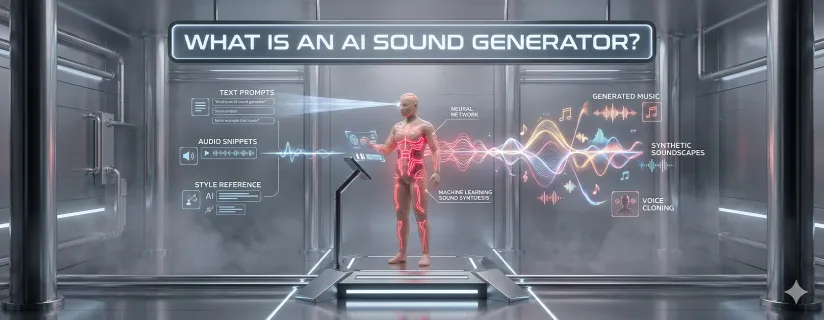
AI sound generators create audio from text or prompts, from voiceovers to sound effects. They are widely used across content, apps, and media. In this article, you will learn how they work, where they fit, and how to choose one. Let’s dive in.
Julian Sterling
Julian Sterling
AI Content Strategist
April 17, 2026
8 min read
what-is-an-ai-sound-generator
In This Article
What an AI sound generator actually is
How AI sound generators turn input into audio
Where AI sound generators fit in real workflows
What makes a good AI sound generator
The main benefits and tradeoffs
Final thoughts

What an AI sound generator actually is

An AI sound generator is software that uses machine learning to produce or transform audio. Depending on the tool, this can include speech, sound effects, ambient audio, or hybrid formats that blend multiple elements.

In real use, the category is broader than it sounds. Some tools focus on generating audio from scratch, while others focus on making existing content more accessible through audio. That difference often gets overlooked, but it directly affects how people choose products.

In everyday scenarios, not everyone needs to generate audio assets. Sometimes the goal is simply to consume information more efficiently. For example, turning long-form content into audio during commutes or workouts has become a common use case, which is where tools like AI Listen naturally fit.

How AI sound generators turn input into audio

AI sound generators follow a structured pipeline that transforms raw input into usable sound. While implementations differ, the underlying logic is consistent across most products.

Learning from audio data

Models are trained on large datasets of recorded sounds. These datasets teach the system how different audio elements behave, from speech cadence to environmental noise textures.

Mapping sound characteristics

The system analyzes patterns such as pitch, timing, rhythm, and tone. In speech, this determines how natural the voice sounds. In sound effects, it shapes how realistic or immersive the output feels.

Generating new audio

Once trained, the model produces new audio based on input. This could be text, a prompt, or structured instructions. The output is not copied from existing data but generated based on learned patterns.

Refining for usability

Post-processing improves clarity, removes artifacts, and adjusts pacing. This step is critical because raw AI output is often not production-ready without refinement.

Where AI sound generators fit in real workflows

AI sound generators are most valuable in workflows where speed, iteration, and scale matter.

Content creation and marketing

Creators use AI audio for voiceovers, short-form videos, and explainer content. It allows fast iteration without repeated recording sessions, which is especially useful in high-frequency publishing environments.

Interactive products and media

In games, apps, and immersive media, AI-generated sound helps build environments more efficiently. Background audio, system voices, and dynamic responses can all be generated without manual production.

Learning and information consumption

A growing use case is turning written content into audio. This is less about “creating” sound and more about adapting information to fit different contexts. Listening while commuting or multitasking is often more practical than reading.

Tools like AI Listen are designed around this behavior, letting users convert documents, web pages, and scans into audio so content can fit into daily routines instead of competing with them.
ai-listen-app
Ready to Transform Your Study Sessions?
Join 50,000+ students using Al Listen to study smarter. Free forever plan available.

What makes a good AI sound generator

Choosing the right tool depends on matching capabilities to actual needs, not just feature lists.

Output quality

Natural pacing, clarity, and consistency matter more than raw novelty. A tool should sound reliable across different inputs, not just in ideal demos.

Level of control

Some workflows need precise tuning, while others prioritize speed. The right balance depends on whether the output is for production or personal use.

Workflow compatibility

Tools that integrate with existing formats and habits are easier to adopt. For example, document-to-audio workflows are more practical when common formats like PDFs or web links are supported directly.

Pricing model

Free tools can be sufficient for everyday use cases, while advanced tools may justify cost for professional output. The key is whether the added quality or control actually impacts results.

The main benefits and tradeoffs

AI sound generators significantly reduce the time required to produce audio. They enable faster iteration, lower production costs, and make audio creation accessible to more users.

They also introduce consistency. Once a system performs well, it can produce multiple outputs with similar quality and tone, which is useful for branding and scalable content.

However, limitations still exist. AI-generated audio can struggle with emotional nuance, subtle expression, and highly specific creative direction. In those cases, human input still plays a critical role.

Final thoughts

AI sound generators are becoming a practical layer in modern workflows, especially where speed and scale matter. They are not a replacement for all audio production, but they are increasingly reliable for many real-world use cases.

For everyday scenarios, the value often lies in making content easier to consume. AI Listen fits naturally into that space by turning documents and web content into audio, making it easier to stay informed without being tied to a screen.

ai-listen-app
Ready to Transform Your Study Sessions?
Join 50,000+ students using Al Listen to study smarter. Free forever plan available.

Frequently Asked Questions
What is an AI sound generator?
An AI sound generator is software that creates or transforms audio using machine learning. It can produce speech, sound effects, or other types of audio depending on the tool.
Is AI sound generation the same as text to speech?
No. Text to speech is one type of AI sound generation focused on voice output, while the broader category includes sound effects and other audio formats.
How do I choose the right tool?
Focus on output quality, control, supported formats, and how well the tool fits into your workflow. Practical usability matters more than feature count.
Can AI-generated audio be used commercially?
Yes, but only if the tool’s licensing allows it and proper rights are secured, especially when voice cloning is involved.
What is the easiest way to get started?
A simple starting point is converting written content into audio. This helps understand the technology without needing complex setup or production workflows.

AI Listen
AI Tools
AI Trends 2026
Share this article:
copy

Popular Articles

Continue exploring text to speech and productivity tips
Top Alternatives to Character AI: Best Tools for Chat, Roleplay, and Storytelling
TTS
Top Alternatives to Character AI: Best Tools for Chat, Roleplay, and Storytelling
In this guide, we explore the top alternatives to Character AI, including tools for roleplay, storytelling, and AI chat. You’ll find quick picks, detailed comparisons, and tips to choose the right platform based on your needs.
What Happens When Two AI Voice Assistants Talk to Each Other?
TTS
What Happens When Two AI Voice Assistants Talk to Each Other?
This guide explains what emerges, why it happens, real applications, and how to review conversations effectively.
Text to Speech Meaning: What It Is, How It Works, and Why It Matters
AI Listen
Text to Speech Meaning: What It Is, How It Works, and Why It Matters
Learn the meaning of text to speech, how TTS works, what makes voices sound natural, key benefits and limits, and how to choose the right tool for your workflow.
PDF to Voice Reader: The Complete Guide to Listening to Any Document on Your Phone
TTS
PDF to Voice Reader: The Complete Guide to Listening to Any Document on Your Phone
A good PDF to voice reader should do more than read text aloud. The best tools handle scanned PDFs, long documents, playback control, and everyday listening workflows with less friction.
Text to Speech on Mac: Best Options in 2026
TTS
Text to Speech on Mac: Best Options in 2026
Want to use text to speech on Mac without wasting time on the wrong setup? This guide explains the best workflows, tradeoffs, and tools for reading documents, web pages, PDFs, and more.
Reading With Kindle Online Chrome Extension: Complete Guide
AI Listen
Reading With Kindle Online Chrome Extension: Complete Guide
Want to listen to Kindle books in your browser or build a smoother read-and-listen workflow? This comprehensive guide explains what Kindle Chrome extensions can and cannot do, and reveals better text-to-speech options for modern reading habits.