Tutorials
What Is the Android Text to Speech Engine and How to Change It
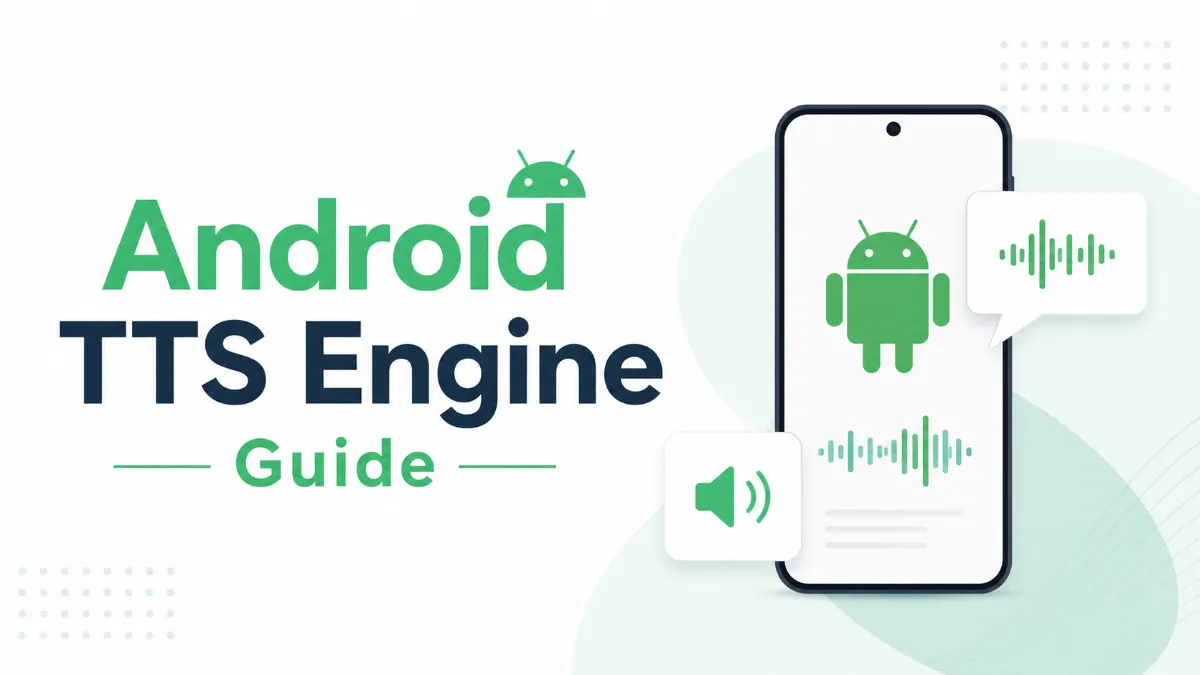
The Android text to speech engine is the system-level layer that converts text to audio for all apps on your phone. Most users never change it — but knowing how to switch engines, download better voices, and configure it correctly can significantly improve TTS quality.
David K. Nguyen
David K. Nguyen
AI Voice Specialist
June 13, 2026
6 min read
android-text-to-speech-engine-guide
In This Article
What the Android Text to Speech Engine Actually Does
The Default: Google Text-to-Speech
Available TTS Engines for Android
How to Change the Android TTS Engine
How to Improve TTS Quality Without Switching Engines
Which Engine Should You Use?
Conclusion

When you use text to speech on Android — whether it's Select to Speak reading an article, TalkBack narrating your screen, or an app reading a document aloud — the audio you hear comes from one source: the Android text to speech engine running in the background. Most users never think about it. But understanding what the TTS engine does, which one your phone is using, and how to change or upgrade it gives you meaningful control over voice quality, offline capability, and how TTS behaves across your entire device.

What the Android Text to Speech Engine Actually Does

The TTS engine is a system service, not an app. It sits between Android and the apps that request audio output. When an app needs to speak text — a navigation app reading directions, an accessibility feature narrating on-screen content, a reading app playing back an article — it sends a text string to the TTS engine and receives audio back. The app doesn't generate the voice itself; it delegates to whatever engine Android has configured.

This architecture means:

  • All TTS on your Android device uses the same voice by default, regardless of which app triggers it

  • Switching engines changes the voice quality everywhere at once

  • Third-party TTS engine apps can replace the system default and be used across all apps that integrate with Android's TTS API

Quick Tip: To download offline voice packs for Google TTS, go to Settings → Accessibility → Text-to-Speech Output → Google Text-to-Speech → Settings icon → Install voice data. Offline voices work without internet and often sound noticeably better than the default streaming voice on some Android builds.

The Default: Google Text-to-Speech

Google Text-to-Speech is the default TTS engine on most Android devices. It uses Google's neural speech synthesis, which produces more natural-sounding audio than older concatenative TTS systems. It's available in a wide range of languages and supports downloadable offline voice packs.

How it works: By default, Google TTS streams synthesis through Google's servers for the highest voice quality. When an offline voice pack is installed for a language, it switches to on-device processing for that language.

Strengths: Wide language support, neural voice quality, frequent updates, broad compatibility with third-party apps

Limitations: Internet-dependent without offline voice packs; the default streaming voice quality varies by Android build and region

Available TTS Engines for Android

Engine

Available On

Offline

Standout Feature

Google Text-to-Speech

All Android (default)

With voice packs

Largest language selection, neural quality

Samsung Voice Services

Samsung devices

Yes (default)

Tight Samsung integration, strong offline

Vocalizer TTS

Third-party (Play Store)

Yes

Premium voice quality, extensive language set

SVOX TTS

Third-party (Play Store)

Yes

Lightweight, legacy device support

Acapela TTS Voices

Third-party (Play Store)

Yes

Character and specialized voices

How to Change the Android TTS Engine

Switching engines requires installing an alternative engine app first (if not already present), then setting it as the preferred engine in system settings.

Step 1: Install an Alternative Engine (if needed)

Search the Play Store for "text to speech engine android" to find available alternatives. Vocalizer TTS and SVOX are the most widely used third-party options. Install the app — the engine registers with Android automatically.

Step 2: Change the Preferred Engine

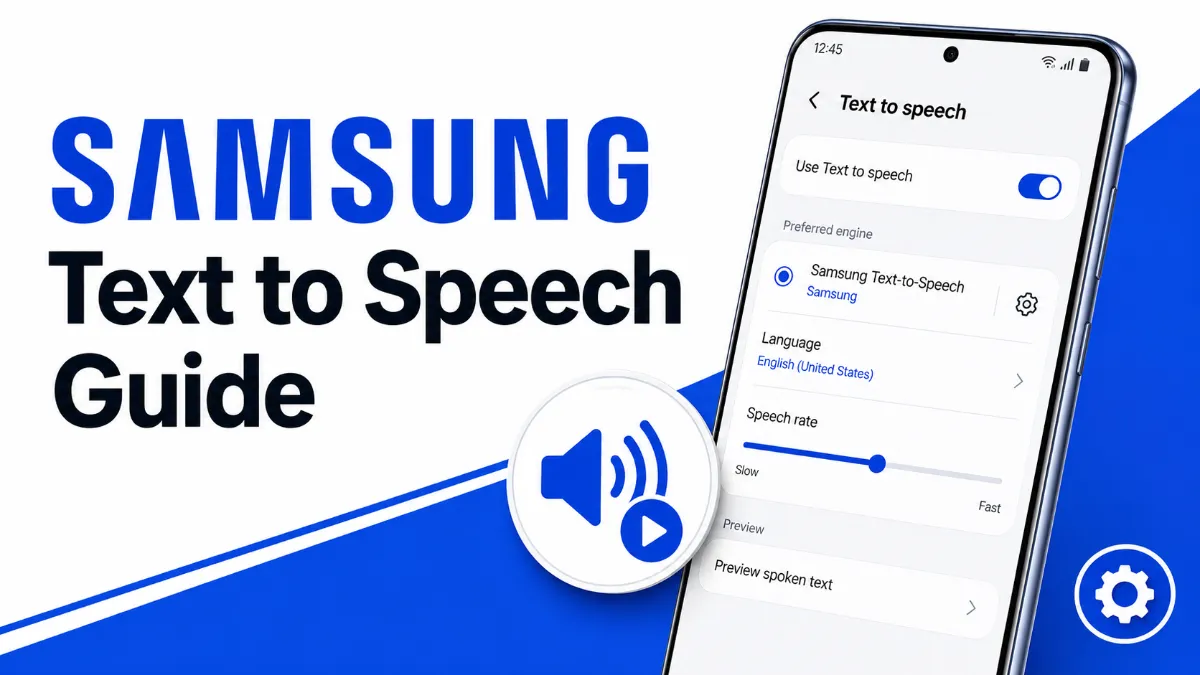
  1. Go to Settings → Accessibility → Text-to-Speech Output

  2. Tap the Preferred engine dropdown

  3. Select the engine you want to switch to

  4. Tap the gear icon next to it to configure voices and language settings

On Samsung devices: Settings → Accessibility → Vision → Text-to-Speech

Step 3: Configure the Engine

Within the engine's settings (accessible via the gear icon), you can:

  • Choose a specific voice or accent

  • Download offline voice packs for your language

  • Adjust default speech rate and pitch (these apply system-wide)

How to Improve TTS Quality Without Switching Engines

If you want better audio without changing the engine entirely, there are two effective options:

Download an offline voice pack: Go to Google Text-to-Speech settings → Install voice data → select your language → download the enhanced voice. Offline voice packs frequently sound better than the default streaming voice and eliminate the internet dependency.

Adjust speech rate and pitch: System-level speech rate settings (in Text-to-Speech Output settings) apply to all apps. A slightly slower rate (0.9–1.0x) often makes TTS easier to follow for extended listening sessions.

Which Engine Should You Use?

  • Standard Android phone: Google TTS with an offline voice pack downloaded — best quality and widest app support

  • Samsung device: Samsung Voice Services works well offline and integrates with Samsung apps; Google TTS is still worth keeping as a fallback

  • Accessibility-focused use: Google TTS with TalkBack — they're designed to work together

  • Highest voice quality: Vocalizer TTS (paid) provides the most natural-sounding output of the available third-party text to speech engine android options

For users who want a complete listening environment beyond system TTS — including article importing, reading queues, and higher-quality AI voices — dedicated apps build on top of whatever engine you've configured. On the iPhone side, AI Listen takes a similar approach, wrapping TTS functionality in a reading-focused interface for articles and documents.

Conclusion

The Android text to speech engine is the foundation that all TTS functionality on your device builds on. Most users get meaningful improvements simply by downloading an offline voice pack for Google TTS — no engine switch required. If you need better voice quality for a specific use case, switching to a third-party engine is straightforward and reversible. Understanding the engine layer means you're tuning the one setting that affects every TTS experience on your phone, not just one app at a time.
ai-listen-app
Ready to Transform Your Study Sessions?
Join 50,000+ students using AI Listen to study smarter. Free forever plan available.

Frequently Asked Questions
What is the Android text to speech engine?
The Android text to speech engine is a system-level service that converts text into spoken audio. It acts as a shared voice layer used by any app that requests TTS output — including accessibility features like Select to Speak and TalkBack, as well as third-party apps that integrate with Android’s TTS API. Google Text-to-Speech is the default engine on most Android devices.
How do I change the TTS engine on Android?
Go to Settings → Accessibility → Text-to-Speech Output, then tap the “Preferred engine” dropdown. Any TTS engine apps you’ve installed will appear here. Select the one you want, then configure its settings via the gear icon. On Samsung devices, this path is Settings → Accessibility → Vision → Text-to-Speech.
What is the difference between Google TTS and Samsung’s TTS engine?
Google Text-to-Speech uses Google’s neural voice models and requires an internet connection for the highest-quality output, though offline voices are available to download. Samsung’s Voice Services engine uses Samsung’s own voice synthesis and is integrated more tightly with Samsung system apps, with stronger offline support by default. Voice quality is comparable, but Google TTS has a wider language selection and more downloadable voice variants.
Can I improve Android text to speech quality for free?
Yes. The most effective free improvement is downloading an offline voice pack for your current engine: these are often higher-quality than the default streaming voice. Go to Settings → Accessibility → Text-to-Speech Output → Google Text-to-Speech → Settings → Install voice data. Alternatively, installing a third-party TTS engine app (such as Vocalizer) provides additional voice options, though premium voices within those apps are usually paid.
Does the Android TTS engine work without internet?
It depends on the engine and voice. Google Text-to-Speech’s default voice requires an internet connection, but downloadable offline voice packs work without connectivity. Samsung Voice Services works offline by default on Samsung devices. Any third-party TTS engine app may have its own online/offline rules — check the app’s settings for an offline or on-device processing option.

Tutorials
Share this article:
copy

Popular Articles

Continue exploring text to speech and productivity tips
AI Audio for Publishing and News: How Publishers Can Turn Written Content Into a Real Listening Product
TTS
AI Audio for Publishing and News: How Publishers Can Turn Written Content Into a Real Listening Product
AI audio is becoming a serious layer in publishing and news. This guide explains the real use cases, tradeoffs, and decision criteria behind adoption.
AI Story Generator: What It Is, How It Works, and Why It Matters
TTS
AI Story Generator: What It Is, How It Works, and Why It Matters
AI story generators turn prompts into structured drafts for fiction, marketing, and education. In this guide, we cover how AI story generators work, their core features, benefits, limitations, and how to choose the right AI Story Generator.
How to Use Text to Speech on Android: Built-In Features and Best Apps
Android’s text to speech tools range from a built-in accessibility engine to dedicated apps designed for longer listening sessions. This guide covers how to use each, and which option fits your workflow.
Assistive Technology for Dyslexia: What Helps Most
Assistive technology for dyslexia is more than a list of apps. This guide explains which tools matter most, who they help, and how to choose support that improves reading and learning in practice.
5 Benefits of Bimodal Learning for Better Retention
AI Listen
5 Benefits of Bimodal Learning for Better Retention
Bimodal learning is more than a theory about seeing and hearing information together. This guide explains five practical benefits, where they matter most, and how to apply them in real study workflows.
Best Free Speech-to-Text Apps for Hearing Impaired Users
AI Tools
Best Free Speech-to-Text Apps for Hearing Impaired Users
If you need a free speech-to-text app for hearing impaired users, the right choice depends on whether you need live captions, daily conversation support, meeting transcripts, or a lightweight browser-based tool.